Elementary

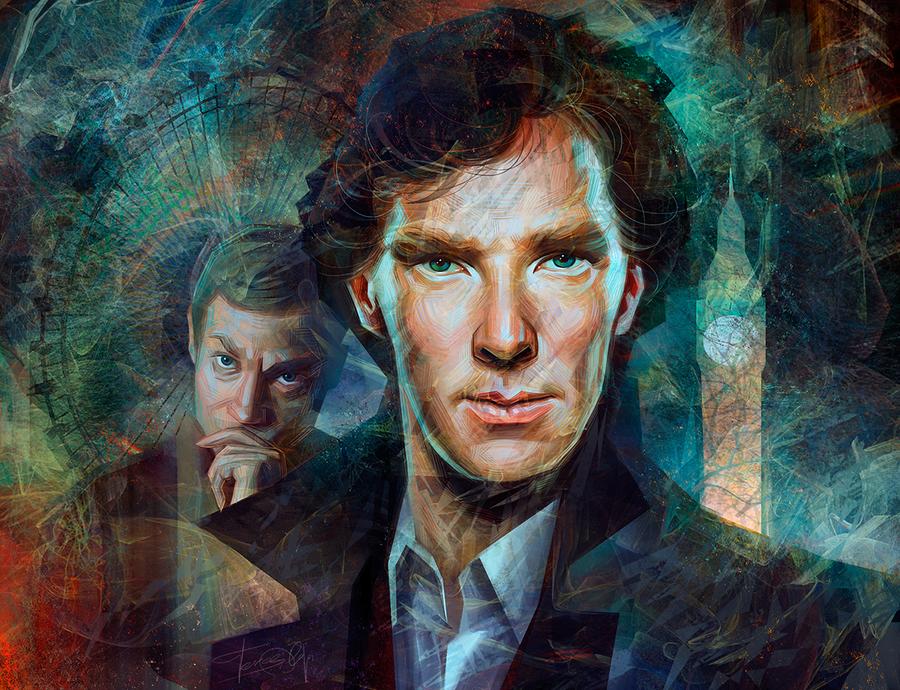
Image: Olga Tereshenko Artistry

“Get me out of here Watson,” he said calmly as he reached for his Moroccan leather briefcase, lifting a wooden briar pipe between his lips only to stare at the A Passing Storm painting in the corner of the room.

Dr. John Watson aggressively stomped his antler-handled cane towards him well-aware it was merely a psychological condition. “We have yet to stumble upon a stimulating case, but you still refuse to do a minor deed for Mrs. Hudson!? And get you out of what exactly? I’ll have you know this generous lady lets you proclaim 221B Baker Street yours as if it were some fancy office we’ve established. The least you could do is help her,” argued Watson.

“Get me out of this burdensome obligation I feel towards this woman, who rarely does her job as our landlord. I shall not expend my time and energy for her granddaughter’s foolish blunder,” Holmes snapped uncomfortably. The French Morbier grandfather clock struck noon as gentle footsteps progressed up the spotless mahogany staircase into their abode. It was Mrs. Hudson in her blue silk Victorian gown, a sweet yet wealthy old lady with only a frown to greet Holmes and Watson.

As she stepped further into the room with her tray of afternoon tea and sliced cucumber sandwiches Mrs. Hudson said, “Sherlock, I beg of you to find Moriarty and dispel our distress. This household struggles to exist peacefully without knowing his whereabouts at all times. I myself have delayed my daily errands to address this matter.” Sherlock Holmes reluctantly signaled Watson to the door as he placed his afternoon tea aside and grabbed his charcoal Burberry trench coat and cashmere scarf.

As Holmes rushed out the door with his pipe, Watson mumbled from behind, “Unbelievable. He wouldn’t listen to me, but he allows some afternoon tea to be the deciding factor. For God’s sake Holmes, wear the damn hat!” Sherlock fixated his eyes and mind on Baker Street which seemed endless, frozen in time as Watson’s voice continued to scold him in the distance and the nippy air brushed against his face.

11:39 AM. Watson’s vexing presence enters the room to explain Moriarty is nowhere to be found. Judging by the black tea stain on his left breast pocket, he must have been in the kitchen downstairs with Mrs. Hudson committing the same mistake I did by consuming that horrendous afternoon tea. The meal was also tasteless and cold meaning Mrs. Hudson was not putting forth her ordinary effort. She must have made the sandwich well before the tea even though she knows I prefer it in the opposite sequence. She could have been speaking with Mrs. Bedford next door… but no no she sets aside time for that after Watson and I are off investigating. Something is out of place. Moriarty must have been a nuisance earlier today when Mary was sent off for her schooling. School! Moriarty must have followed Mary to school, but why?

“Watson! Summon a carriage,” shouts Sherlock with enthusiasm to solve Mrs. Hudson’s predicament quickly. Trotting down Baker Street’s uneven cobblestone road and through a crowd of Englanders, the driver of an enclosed, horse-drawn carriage stops in front of the residence in awe of his passenger.

“Pardon me Dr. Watson, is that him? Mr. Holmes, is that really you? It’s an honor sir,” the excited carriage driver says looking through his rear window.

An impatient Watson replies, “We simply require transportation from here to the Chesterbrook Academy please. No unnecessary attention and you will be compensated for your services.”

How unappealing, Moriarty is making this dilemma far too predictable. What could have been his justification for this? Making a decorated veteran such as Watson as anxious as a canine without its master and driving Mrs. Hudson mental.

Watson and Holmes observe numerous stone chimneys contribute to the noticeable pollution in London. Young paperboys ran from bakery to bakery flashing The Daily Telegraph distracting the adults from impoverished children stealing the fruits of their labor. Finally, the carriage arrives at Great Titchfield Street in West London, in front of a C-shaped building two stories high with a vast lawn and a walk path to the main doors.

“Private detective Sherlock Holmes, and this is my acquaintance Dr. John Watson. Have you seen a miniscule Victorian Pug within your premises? I fear he may have wandered onto your property in search of its owner’s granddaughter,” says a curious Sherlock to the amused headmaster seated behind his large cherry wood desk.

“Yes, as a matter of fact he is with all the children in the playground as we speak,” responds the headmaster. As the three gentleman traveled to the courtyard, Holmes spoke of his daily life as a high-functioning sociopath with the headmaster while Dr. Watson harbored a rigid face eager to secure Moriarty. Soon enough, a pair of large, dark eyes with a cream coat and a tightly-curled tailed appeared at their feet.

With a smirk on his face Holmes shifts his attention to his relieved partner and says, “Elementary, my dear Watson. Moriarty will bring us no further trouble.”

Materialism & Me

Image: The Container Store

I’m guilty of it and I’m aware.

Many of my family members and friends will tell you that I’m one of the most high-maintenance guys they’ve met. Although I’m not proud of it, the truth is I’ve always craved the finer things in life. From my Brooks Brothers clothing and Versace cologne to my Adidas Yeezys and Ultraboosts, I found a false sense of security and joy through my possessions for years. While there’s nothing inherently wrong with being materialistic, I’ve learned a couple of severe consequences associated with the material pursuit of happiness:

  1. Materialism Fosters Fewer Positive Emotions

The American Psychology Association conducted an interview in 2014 with Tim Kasser, Knox College psychologist and former associate editor of the Journal of Personality and Consumer Culture, on materialism and well-being. His research suggested that the more individuals embraced materialistic values, the more they experienced mental illnesses such as anxiety or depression and succumbed to substance abuse. Furthermore, feelings of insecurity in terms of social rejection, financial setbacks, and suicidal ideation all perpetuate materialism.

In my experience, materialism is mostly viewed in a negative light within society. However, it’s important to recognize that family, friends, and various media outlets impose materialistic beliefs onto people contributing to the internal conflicts many deal with including myself.

2. Materialism Can Directly Impair Our Social Lives

A paper published in 2012 in Psychological Science demonstrated that people in a controlled experiment who were repeatedly exposed to images of luxury goods (i.e. cars, electronics, and jewelry), phrases related to materialism, and referred to as consumers instead of citizens exhibited regressions in demeanor. These individuals became more competitive, selfish, and less empathetic with a reduced sense of social responsibility.

Another paper published in 2013 in the Journal of Consumer Research followed 2,500 people over six years. The researchers concluded that a bidirectional relationship exists between materialism and loneliness. In other words, materialism encourages social isolation and social isolation cultivates materialism.

Growing an unhealthy attachment to or obsession with objects can be dangerous, so much so that it can induce illnesses as mentioned before, which nothing should be able to do to anyone.

The evidence speaks for itself. More importantly, I’d be lying if I said I didn’t feel hypocritical during my research.

In the past, I have been labeled or felt selfish, overly competitive, and cold-hearted. Although I’ve never endured a mental illness, I have turned to material possessions during times of insecurity.

I don’t intend to completely rid myself of my penchant for luxuries because I plan to live a life worth reliving. However, in the future if you were to ask me what I value most, I won’t point to the watch on my wrist, the high-end glasses on my face, or my posh car. I’ll reference my strong morals, my healthy mind and body, my quality relationships, and my challenging yet meaningful occupation.

Dear Kobe

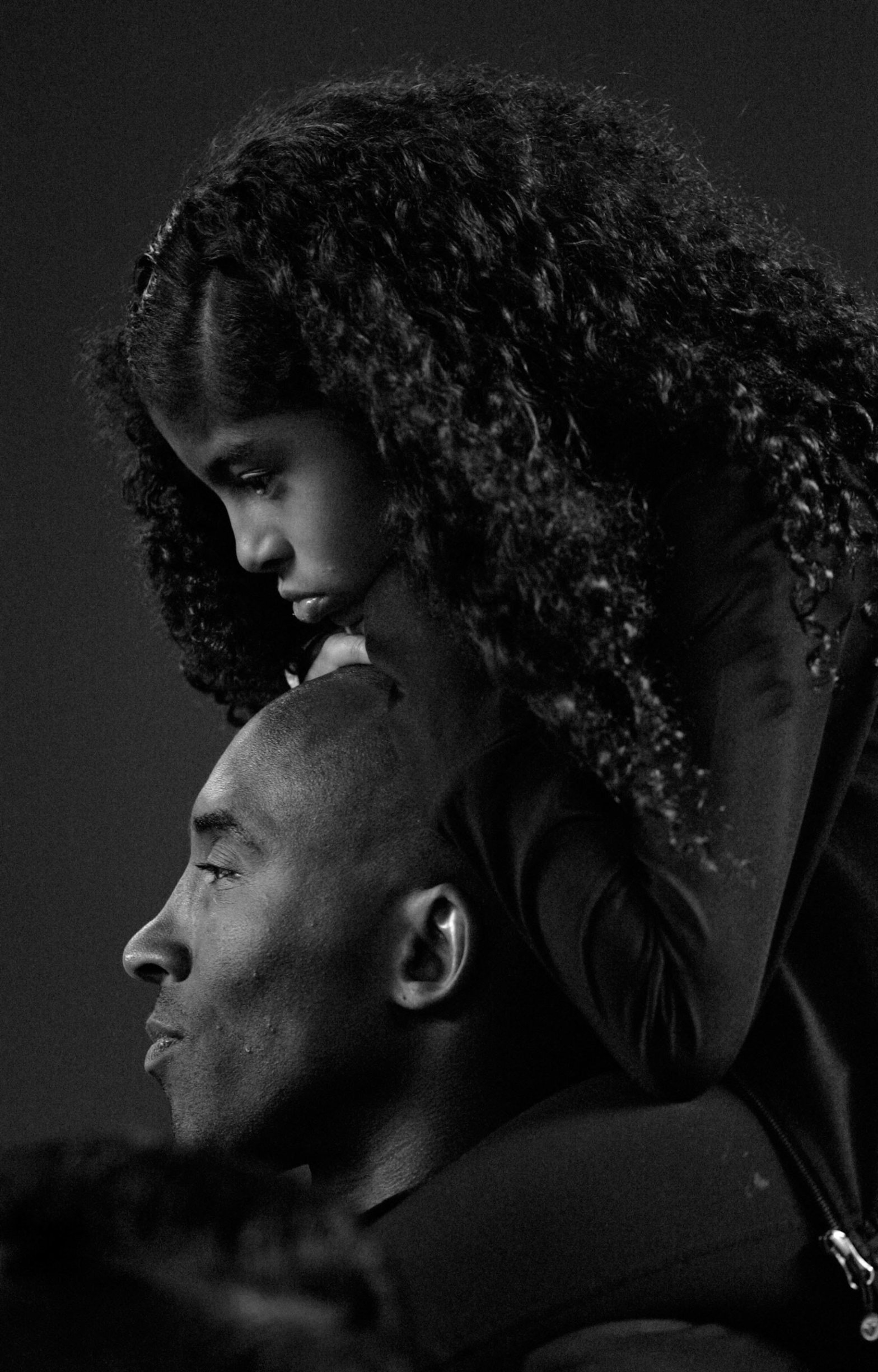
Image: Kent C. Horner Photography

Dear Kobe,

I never realized how much you meant to me until I found myself crying in my bathroom hours after your death. The truth is, you were a huge part of my childhood.

A few months ago, I impulsively donated a couple of pairs of your signature shoes thinking I was done playing basketball. But your death made me instantly regret that decision.

I asked my parents to find my “Black Mamba” t-shirt somewhere in my room and set it aside for when I came home. Later that night, a friend and I decided to wear all black then drive to the nearest gym to shootaround in silence. Neither of us could think of a better way to honor you and your legacy.

You were the reason I picked up a basketball again after months of not stepping on a court.

As a New York Knicks fan, I despised you. You’ve held the record for most points scored by any opponent in Madison Square Garden (61 points) since 2009. On the other hand, I’ve always admired you from a distance, not only for your impossible shot-making abilities but also for your tenacity as a defender.

But I’ll let the rest of the world praise your unmatched work ethic, the Mamba Mentality, because I gained a few life lessons from you as I watched you grow.

As a 17-year-old, you were the best high school player in the country. Then, the NBA put you at the dead center of the Los Angeles spotlight with grand expectations.

8 points, 2 rebounds, 1 assist, 1 steal, and almost zero blocks. Those were your rookie season averages, remember? You struggled and I don’t blame you, because no matter how talented you were, you were just a kid.

The world knew you wanted to be the best and you weren’t shy about telling us all that. We knew you wanted to be “like Mike” and it was obvious through your style of play that you studied him well.

You were a teenager with tunnel vision and the light at the end of your tunnel was greatness. 20 years and 5 championships later, I remember watching your last NBA game live against the Utah Jazz from my couch. Shaq challenged you to score 50 points that game, and you scored 60. You and I both know you weren’t done because you still weren’t the greatest of all time, Michael was. What I didn’t realize back then was that you had no choice but to quit.

In “Dear Basketball”, you shed some light on my mixed emotions from that day. One stanza stood out to me in particular:

“My heart can take the pounding, my mind can handle the grind, but my body knows it’s time to say goodbye and that’s okay. I’m ready to let you go.”

From your torn Achilles tendon to your fractured knee, your injury-plagued body was a humble reminder that every superstar athlete is just as human as I am. I’m sorry I overlooked your injuries, but growing up you appeared to be superhuman, so your retirement felt bittersweet.

The next chapter of your life brought the artist out in you. I’ve always been enamored with the film industry’s ability to convince us of something they’re not with each film. However, you decided to create from the truth and share your life’s story through a four-minute animation.

As the first professional athlete to win an Oscar, you taught me that with any creative endeavor, nothing beats being honest and genuine. In fact, that’s the guiding principle for my entire blog.

Your love and passion for your family and children, in general, was a pleasant surprise, a side of you I didn’t expect to see. I especially envied your relationship with Gianna.

Hearing stories about you coaching her basketball team and watching videos of you two talking court-side at NBA games made the idea of being a father and having a daughter seem exciting.

Also, I’ve heard you published a few children’s books recently? I’ll be sure to share them all with my own children someday. I know The Alchemist was your favorite book so it didn’t surprise me to hear you were working with Paulo Coelho on yet another publication too. Unfortunately, he’s deleted your draft because to him it didn’t make sense to publish without you. As disappointed as I am about that, I agree with his decision.

Lastly, I admire what you did for Vanessa. I understood you were fluent in Italian because you were raised in Italy, but what I didn’t know was that you became fluent in Spanish because you married a Latina. That act, to become closer to her and your mother-in-law, was endearing. Your gesture showed me that love isn’t just an emotion, it’s also an action and a commitment to those that matter.

You didn’t just shut up and dribble, you inspired. I want you to know that the “Black Mamba” was never my favorite nickname of yours, it was “Vino”. I learned years ago that, with its roots in Spanish and Italian, it meant you aged like fine wine as a human being. I hope I grow to be as well-rounded as you were.

Thank you for teaching me to never let my career define me.

I won’t cry anymore knowing that you’re gone, instead, I’ll smile because you were here. Rest in peace Kobe Bryant, Gianna Bryant, John Altobelli, Keri Altobelli, Alyssa Altobelli, Christina Mauser, Ara Zobayan, Sarah Chester, and Payton Chester.

Sincerely,

SG

What Music Means To Me

Image: Shutterstock Images

Music keeps me from going insane.

Unfortunately, I’ve overthought just about everything there is to overthink and I’m often the victim of my own imagination. Although I’m neither a musician nor a singer, I’d say music means just as much to me as it does to anyone that creates it.

I’ve found myself overthinking if I chose the right answer on an exam after turning it in. I’ve overthought a friend’s advice on how to interact with that girl plenty of times. I’ve found myself overthinking whether I could set a new personal record before squatting or laying on a bench press with my trainer beside me saying, “Don’t overthink, just do it.”

This is where music comes in. It’s my therapy that, without fail, keeps me grounded.

For example, I would listen to Hans Zimmer’s Interstellar soundtrack the morning of an exam as I walked to the campus library at 5 AM to wake up and focus my thoughts before I crammed. When I’m at the gym, it’s A$AP Ferg or Lil Wayne that pushes me to finish my set instead of dropping my dumbbells mid-workout and driving to Cookout for a milkshake (yes, I forgot my headphones at home once and this happened).

Whether I’m driving alone or with others, artists like Justin Timberlake, Chris Brown, Arijit Singh, and Sid Sriram make me want to take a detour and extend my trip just a little bit. More recently, I came across an old track called “My Little Brown Book” by Duke Ellington and John Coltrane that feels like a stroll down Bourbon Street on a summer night while I’m in the kitchen meal prepping for the week on a Sunday.

You get the idea. Music is my escape, and there is a time and place for every genre I listen to. It helps me live in the present when I’m so caught up pondering my near and distant future. Music is so instrumental (get it?) to my way of living that I listen to some form of it every day.

In other words, I could never give music up. I hope confessing my love for music encourages you to ask yourself the same question: what does music mean to you?

Emotional Intelligence: The Skills I Was Never Taught

Image: Shutterstock Images

Heartless and lacking emotion. Those were the words my father and brother used to describe me a few years ago. As piercing as their thoughts were, they weren’t wrong.

At the time, I chose to think instead of feel in any given situation, dismissing emotion as something that would only cloud my judgement. Recently, I came across the phrase “emotional intelligence” which caught my attention because it seemed like an oxymoron. How could someone be emotional and intelligent? Or better yet, how could one understand their own emotions and the emotions of those around them so well? 

During my senior year of high school, my maternal grandmother passed away because of her chronic kidney disease that led to a sudden cardiac arrest. Then, exactly 11 months later during my first semester of college, my paternal grandfather was diagnosed with stage four lung cancer that had metastasized to his brain. Physicians ruled out radiation therapy and chemotherapy because as an 81-year-old, they argued he was too weak to withstand aggressive treatment, so he was moved to palliative care where he eventually passed away. Traveling to India three times within that year to either attend their funerals or visit bereaved relatives was emotionally and mentally taxing. 

After their deaths, I would pick-and-choose when to make myself emotionally available to my family, friends, and ex-girlfriend. In retrospect, I understand why my own family thought I was emotionless and it’s because I disconnected my emotions from my actions and just went through the motions with everyone. Overwhelmed by my own suffering, that’s how I neglected my immediate family and avoided serious conversations about my well-being with friends who showed genuine concern. While distancing myself from everyone else, I realized I could never repay my grandparents for their love and care. However, I felt the least I could do was make them proud by turning my aspiration of becoming a physician into a reality.

I thought I could cope with my feelings by focusing my attention on my education and service opportunities.

I came across Global Medical Training at VCU through the Honors College weekly newsletter, a student organization that organized medical mission trips to countries such as Peru, Nicaragua, the Dominican Republic, and India. In order to be selected for a trip, I had to show commitment to the club’s mission, so I became heavily involved in their fundraising events and community service activities. Eventually, I was chosen for their trip to Nicaragua in May 2016.

Interacting with patients who struggled to access basic healthcare indirectly taught me to value the comfortable, long lives my grandparents had lived. They had the chance to meet and know their grandchildren, a chance some Nicaraguans may have lacked. More importantly, engaging the patients’ families reminded me that an individual’s illness can affect an entire household. My trip highlighted my failure to provide the emotional support, acceptance, and love my parents deserved from their oldest child when they needed it the most. I realized that my selfish decision to emotionally isolate myself only worsened my family’s situation. 

So, through service, I thought I had coped with my own grief since I slowly reconnected, first with my peers and patients, then later with my family and friends.

But did I truly “fix” myself?

Mahatma Gandhi once said, “The best way to find yourself is to lose yourself in the service of others.” This famous (and notoriously overused) quote reflects how I chose to handle myself at the time. After serving on multiple mission trips over the past four years since the deaths of my grandparents, I can say that Gandhi’s saying is more idealistic than realistic. I tried “losing myself” in service of others, but a physician I recently spoke with mentioned my approach was a poor plan of action.

His words hit me like a ton of bricks, not because it felt insensitive, but because he was right.

I found more emotional relief in writing several drafts of this piece than I did in serving disadvantaged patients in Central American countries. That being said, I don’t regret throwing myself into service because it taught me to acknowledge the emotions of those around me.

Personally, I believe emotional intelligence is a multi-faceted concept. All of us should be able to recognize, control, and express the thoughts and emotions of ourselves and those we love meaning self-awareness, self-regulation, self-expression, and empathy for others. Four years ago, I was emotionally naïve and lost because of my nature and circumstances. Fast-forward to today, and I’m still a work-in-progress. 

However, if there’s one lesson I’d like you as the reader to take away from this piece, it’s that I was wrong.

Emotion doesn’t always cloud your judgement, it can improve your judgement too. The only thing which separates us from machines is our ability to feel and being in-touch with your own emotions and those of others is essential to being human.